


Autoblog Compares the Trailseeker with its Near Twin, the Toyota bZ Woodland
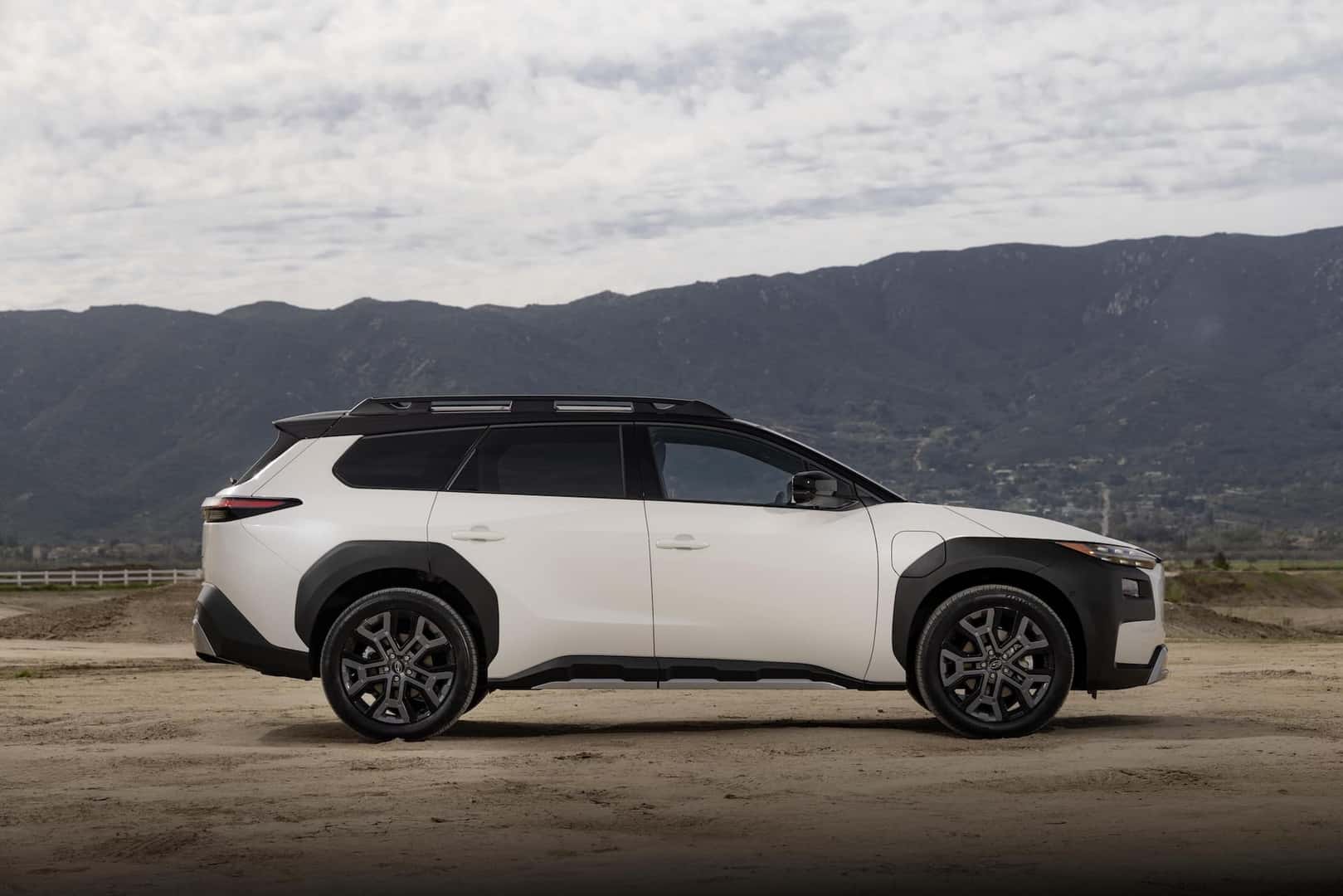
Subaru and Toyota share about four co-developed models that are nearly identical. This includes their lights, sports cars, and all three of their EV offerings. Where they differ is in front-end styling, a few other details, badging, and how each brand packages its model. The largest of their EVs, the Subaru Trailseeker and the bZ Woodland, offer a perfect example of how each brand tailors the same vehicle to its own market. Autoblog conducted a direct comparison of these two models, and Ewing Subaru of Plano shares what they found.
The Trailseeker is essentially the updated Solterra with a longer roof, giving it a more wagon-shaped body. If the Solterra can be seen as an EV alternative to the Forester, the Trailseeker is essentially an EV alternative to the Outback. Toyota’s version has the same body but features the front-end “hammerhead” styling seen on so many of its models. The Trailseeker retains the Solterra’s frontend, with 6-element headlights that reference the six stars in the Subaru logo.
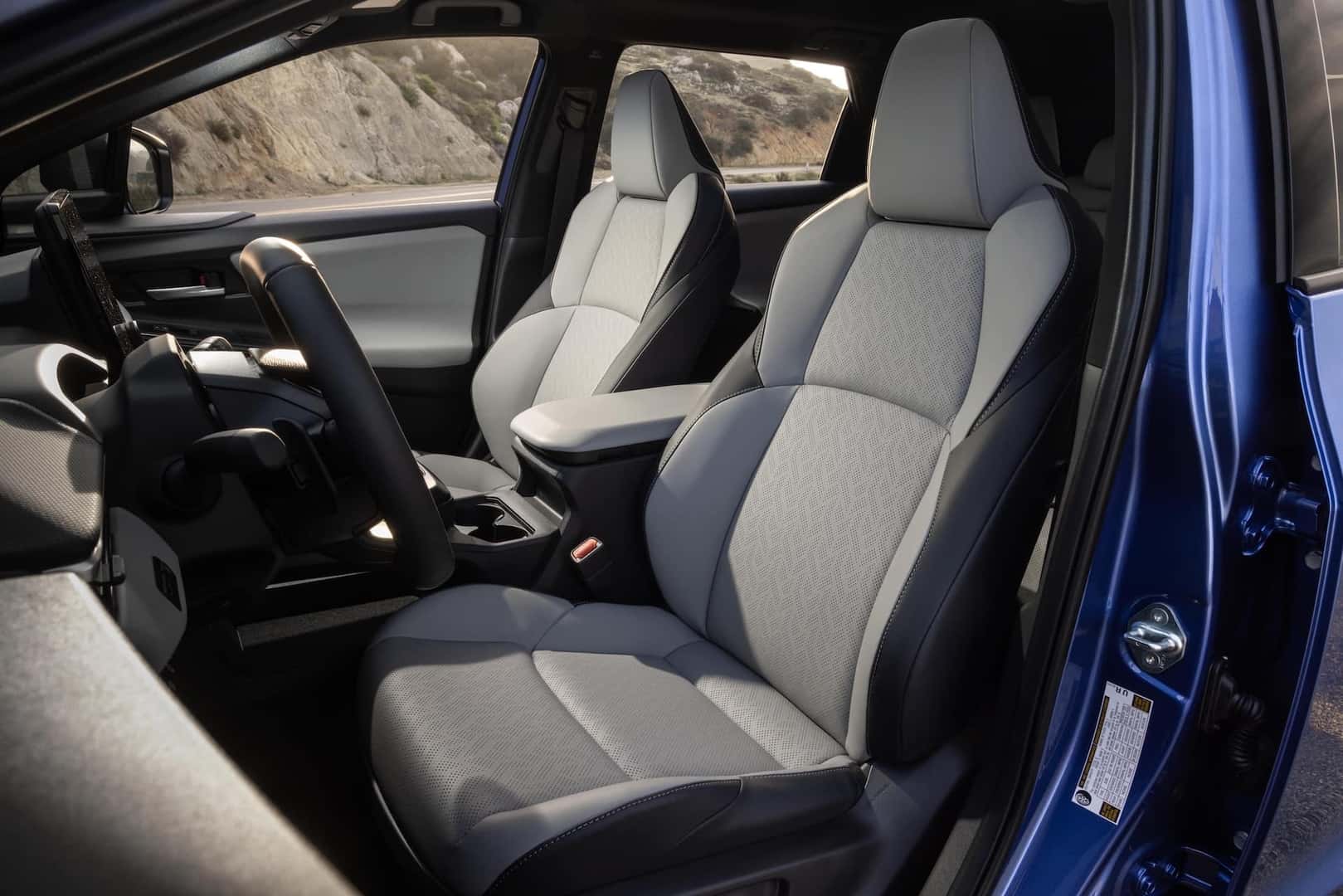
Both models also share the same dashboard and multimedia system, with one key difference. Both dashboards include a digital driver display mounted above the upper steering rim. This is clearly Toyota’s doing, as they have also applied this idea to the Prius. The upper location enables it to effectively double as a head-up display, which is nice. However, the steering wheel can block some information depending on your height and/or driving position. Subaru provides a steering wheel with a flattened upper rim to accommodate this, while Toyota ignores the issue and sticks with a conventional steering wheel.
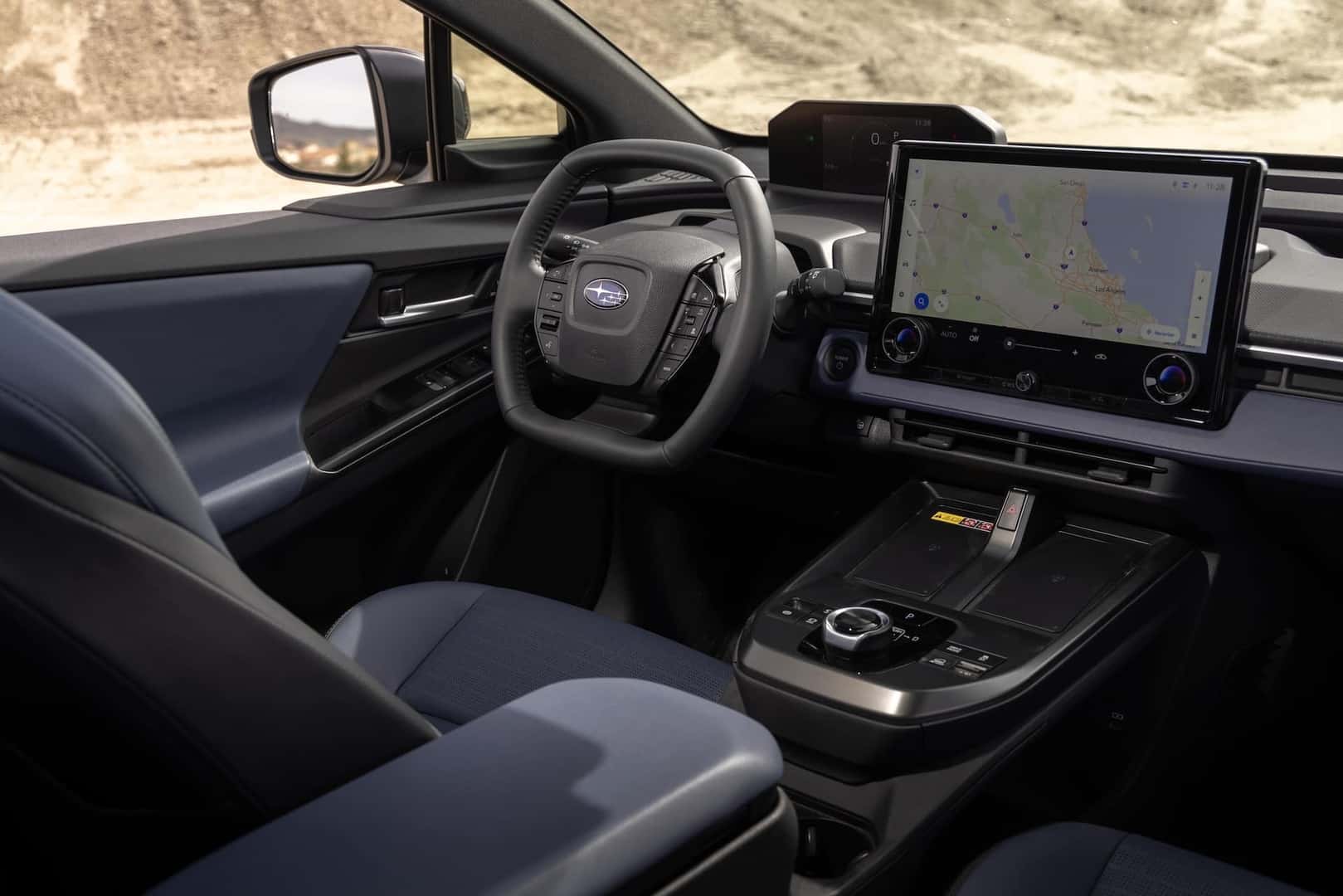
Mechanically, they are the same. Both have a standard 74.7 kWh lithium-ion battery powering one motor between the front wheels and another at the rear, for a combined 375 horsepower. Both models get an EPA rating of 117 MPGe (MPG-equivalent based on a gallon of gas) for a range of 281 miles. The available 20-inch wheels reduce the Trailseeker’s range to 274. Upper-level bZ Woodland models retain 18-inch wheels, but an all-terrain tire option reduces the range to 260 miles. The Trailseeker does not offer all-terrain tires as a factory option, though that can be added at the dealer level.
The Subaru-designed X-Mode Dual-Mode system is standard on both models, which Toyota calls X-Mode with Grip Control. Autoblog described the system this way: “Functionally, they are the same low-speed crawl system, but Subaru’s interface feels more central to the driving experience, whereas Toyota treats it like a secondary tool for ‘if you absolutely must’ leave the pavement.”
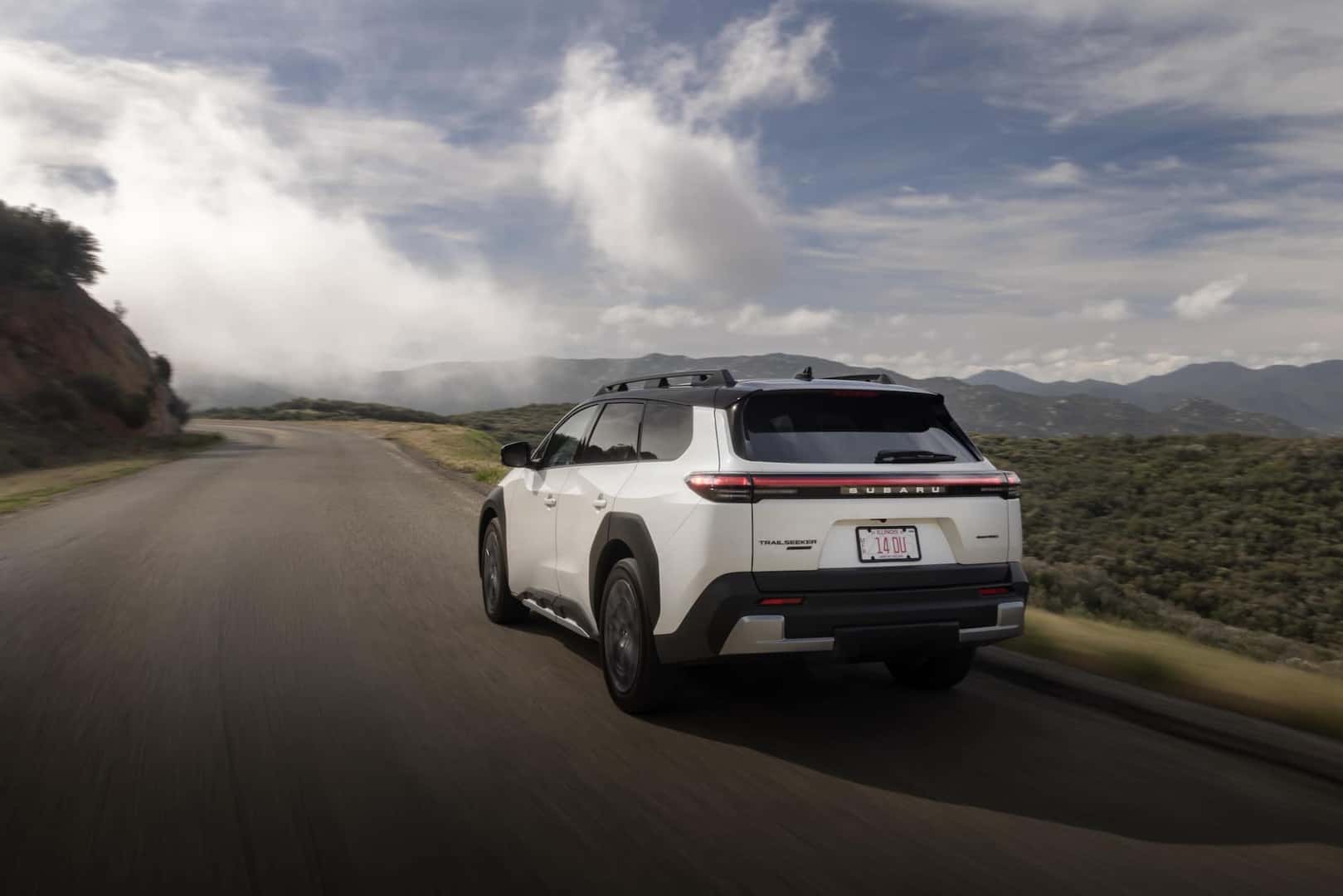
Autoblog found a few other unexpected differences. The Trailseeker offers slightly higher ground clearance of 8.5 inches, compared to 8.4 inches for the bZ Woodland. Perhaps more useful is that the Subaru has a tighter turning circle of 36.7 feet compared to 40 inches for the Toyota, which they point out can be quite useful “when you are trying to execute a three-point turn on a trailhead.”
Here is where the biggest difference lies. The bZ Woodland has a starting MSRP of $45,300. The Trailseeker with the same drivetrain and battery has a base MSRP of $39,995, and for this reason, Autoblog states “the Subaru Trailseeker is the smarter buy, hands down.”
If you live in the Plano or greater Dallas area, we invite you to visit Ewing Subaru of Plano to check out Subaru’s new and most spacious EV.
0 comment(s) so far on Autoblog Compares the Trailseeker with its Near Twin, the Toyota bZ Woodland