


Motor Trend Compares Forester with Forester Hybrid
One reason to read automotive magazines is their insight into predicting the future. However, Motor Trend was caught a little flat-footed when they had just taken delivery of their 2025 Forester Sport, and Subaru announced that a Forester Hybrid model would be added. Now they have had a chance to compare the two, and Ewing Subaru of Plano gives you the highlights.
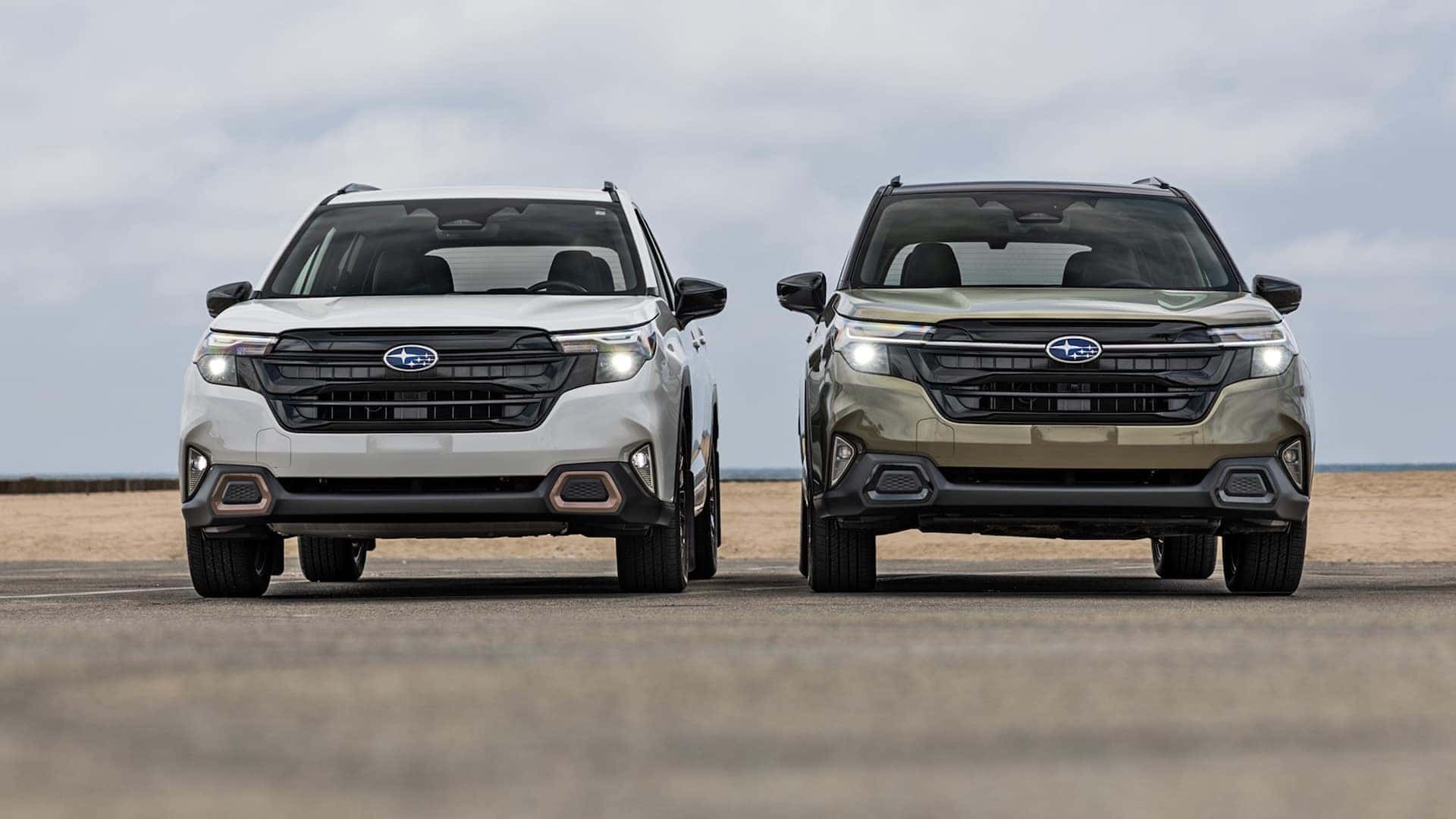
As mentioned, Motor Trend’s long-term vehicle was a mid-grade Forester Sport. They were able to get their test figures from an equivalent Hybrid Sport, though the model they had for a week was a top-level Touring Hybrid.
Still, the two drivetrains remained the primary focus of this comparison. Starting with the basic specs, the non-electrified model’s 2.5-liter BOXER-4 engine produces 180 hp and 178 lb-ft of torque. It is paired with a continuously variable transmission (CVT) that includes eight preset ratios, which you can use for paddle-shifter manual shifting.
The hybrid uses a version of the same engine without variable valve timing and adds front and rear motors for a 14-horsepower increase. Torque will also be higher, but Subaru hasn’t published that figure. The hybrid system is paired with a CVT with six preset ratios instead of eight, probably because the increased torque from the motors makes two additional preset ratios unnecessary.
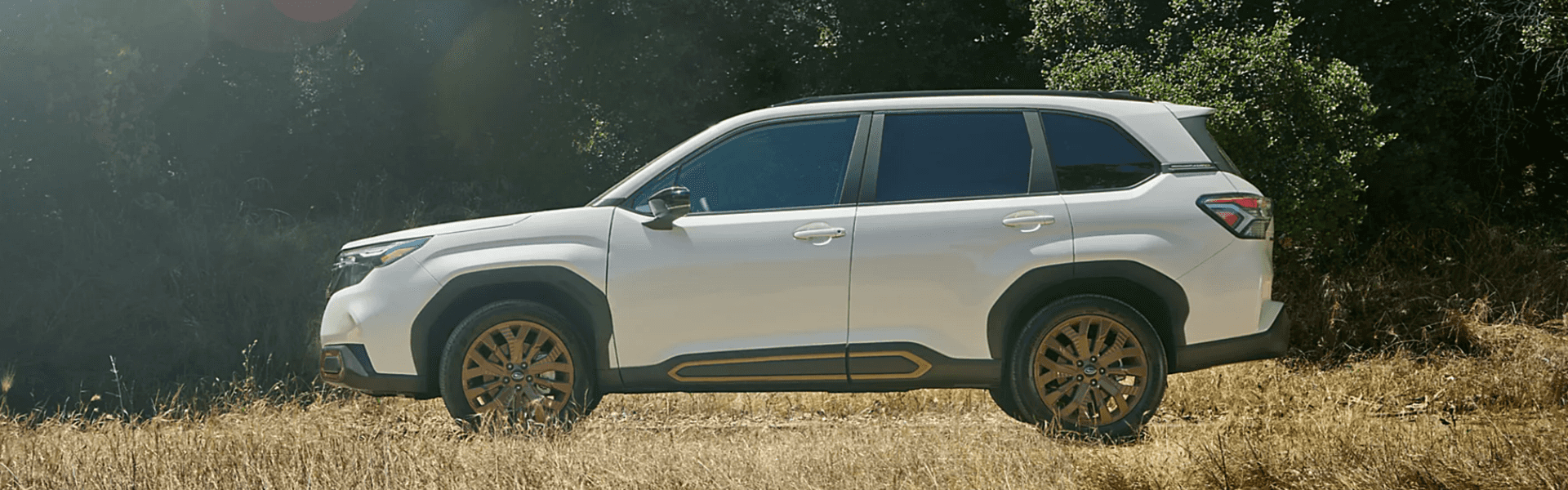
In the classic 0-60 mph metric, the difference is minimal. Their long-term Sport reaches 60 mph in 8.7 seconds, while the hybrid does it in 8.6 seconds. They note that these numbers don’t fully tell the performance story between the two models. In city driving, acceleration from 0 to 30 mph is more common. The non-hybrid reaches 30 mph in 3.2 seconds, but the hybrid’s electric motors get there in just 2.8 seconds. Practically, this means you might floor the accelerator from a stop in the Forester Sport, but you probably won’t need to in the hybrid. The electric motors also provide a much smoother start from a stop.
Of course, the main goal of a hybrid is to improve fuel economy, and here, the difference between the two drivetrains is immediately more apparent. The Forester Sport has an EPA city/highway/combined estimate of 25/32/28. In contrast, the Hybrid Sport is rated at 35/34/35. Once again, the difference is significant for city driving but becomes less noticeable at highway speeds.
This raises the question of initial versus operating costs. The Forester Sport has a starting MSRP of $36,105, while the Sport Hybrid costs $3,490 more at $39,595. The entry-level hybrid model is the Premium Hybrid, with a starting MSRP of $36,595. How quickly the cost difference is recouped depends on your driving habits and whether most of your driving is stop-and-go around town or highway cruising. There’s also the consideration of fixed versus variable costs. The extra cost of the hybrid will lead to a higher monthly payment by the same amount, but the hybrid will make each trip slightly cheaper.
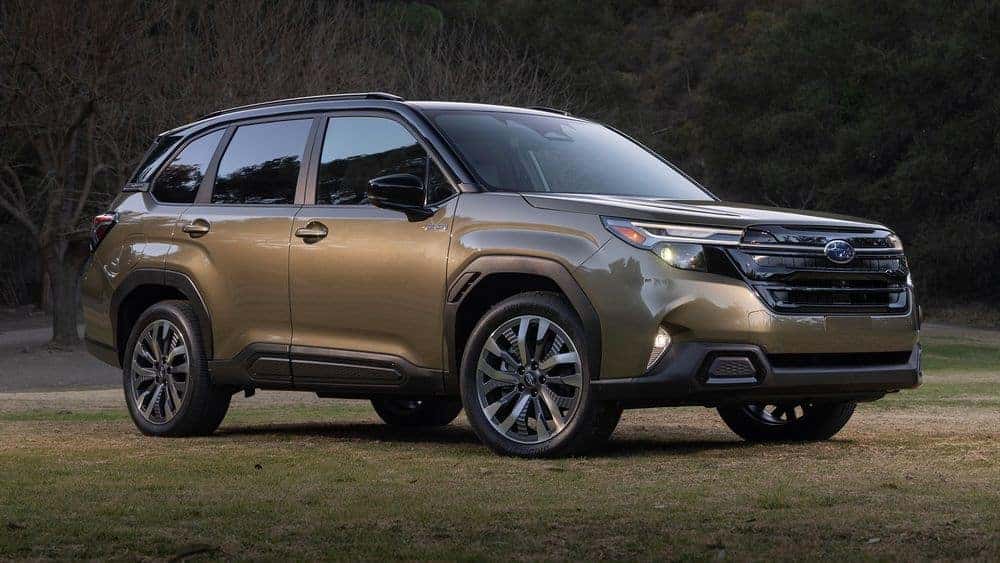
Those are your numbers to consider, but Motor Trend finds the Hybrid worth the expense. “… you’re going to be able to go on longer adventures on less fuel while also having a more enjoyable day-to-day experience around town.” They also point out that Subaru owners tend to keep their vehicles for a long time, which increases the likelihood that lower operating costs will outweigh the higher initial price.
Either way, the Forester offers a great compact crossover experience, with owner satisfaction shown in long ownerships, high customer ratings, and even strong resale value. Check out both the hybrid and non-hybrid Foresters at Ewing Subaru of Plano to see which one is best for you.
0 comment(s) so far on Motor Trend Compares Forester with Forester Hybrid